


Richard Haynes: Learning to See
Curated by Alison Crites
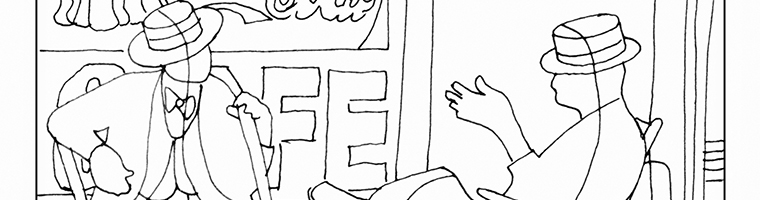
Born in the segregated South, New Hampshire-based painter Richard Haynes transforms the United States history of division into a vision of unity and love, celebrating the beauty of togetherness through depictions of everyday moments. His painted figures, rendered in colorful silhouettes or crisp outlines, transcend individuality. Their ambiguous nature invites viewers to interpret for themselves elements such as race, class, and time period. Through this interplay of absence and presence—between what is invisible and visible—Haynes explores how we see one another. Seeing is shaped by personal experience, cultural background, and knowledge, and for Haynes, the capacity to connect with others depends on learning to see—and love—without condition.
As a Black man in the U.S., Haynes has felt invisible despite his service in the U.S. Air Force and his accomplishments as a commercial photographer; he even, at one point, contemplated ending his life. A chance encounter with a minister helped Haynes find strength and purpose through faith and community. He began to create images of the world the way he wanted to see it: vibrant, compassionate, and whole.
Richard Haynes: Learning to See features boldly-colored acrylic paintings from two series, The Great Divide and World Leaders in Moral, Spiritual Decline. There are more than 50 black and white drawings from The Sum of Us along with the artist’s preparatory sketches for Whispering Quilts, a series based on quilt patterns believed to have conveyed messages along the Underground Railroad. The exhibition also includes a selection of photography from across Haynes’ career: images from his never-before-exhibited Burning of the Bronx series from the 1970s and more recent work that captures moments of serenity in and around Portsmouth, NH. Seen together, Haynes’ drawings, paintings, and photographs assert the artist’s belief that art has the power to shift perceptions, to heal, and to unite.






