July 1 - November 1, 2026
Migration/Home
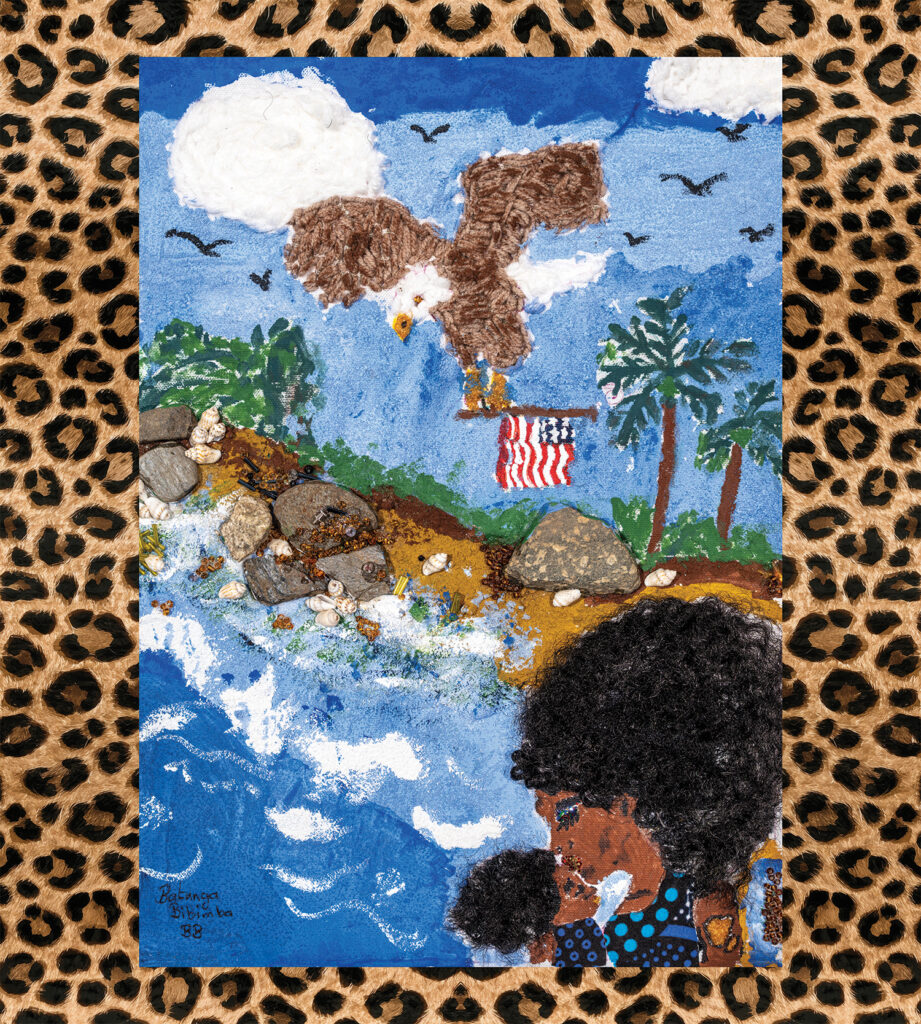
Migration/Home is a public artwork organized by Brattleboro artist Jonathan Gitelson to coincide with the 250th anniversary of the signing of The Declaration of Independence. Gitelson commissioned the work from artists who are members of the ArtLords. A mural collective founded in Kabul, Afghanistan, in 2014, the ArtLords are part of Brattleboro’s resettled refugee community. The featured artists include Marwa Safa Azimi, Butunga Bibimba, Abdullah Elhan, Sean Kiziltan, and Zuhra Nadem.
The piece consists of seven panels connected by themes of displacement, migration, and home. Imbued with cultural references, each panel functions as an individual piece and as an element of the larger work.
In a nation founded by colonization, it is impossible to extract the idea of immigrants from the idea of Americans. Migration/Home draws from artistic traditions such as Persian miniature paintings, calligraphy, and poetry; Pashto poetry; Congolese embroidery; and abstract art. Just as American culture is influenced by the traditions and practices of immigrant communities, this work creates a new visual language from its combination of artistic genres.
The concepts of migration and home are especially complex when people are forced to flee a beloved homeland to reach safety, only to find new perils and persecution in the country where they land. This artwork depicts that complexity and shows us what it looks like today to join the 250-year-old tradition of seeking home in the United States.
Artist Statements

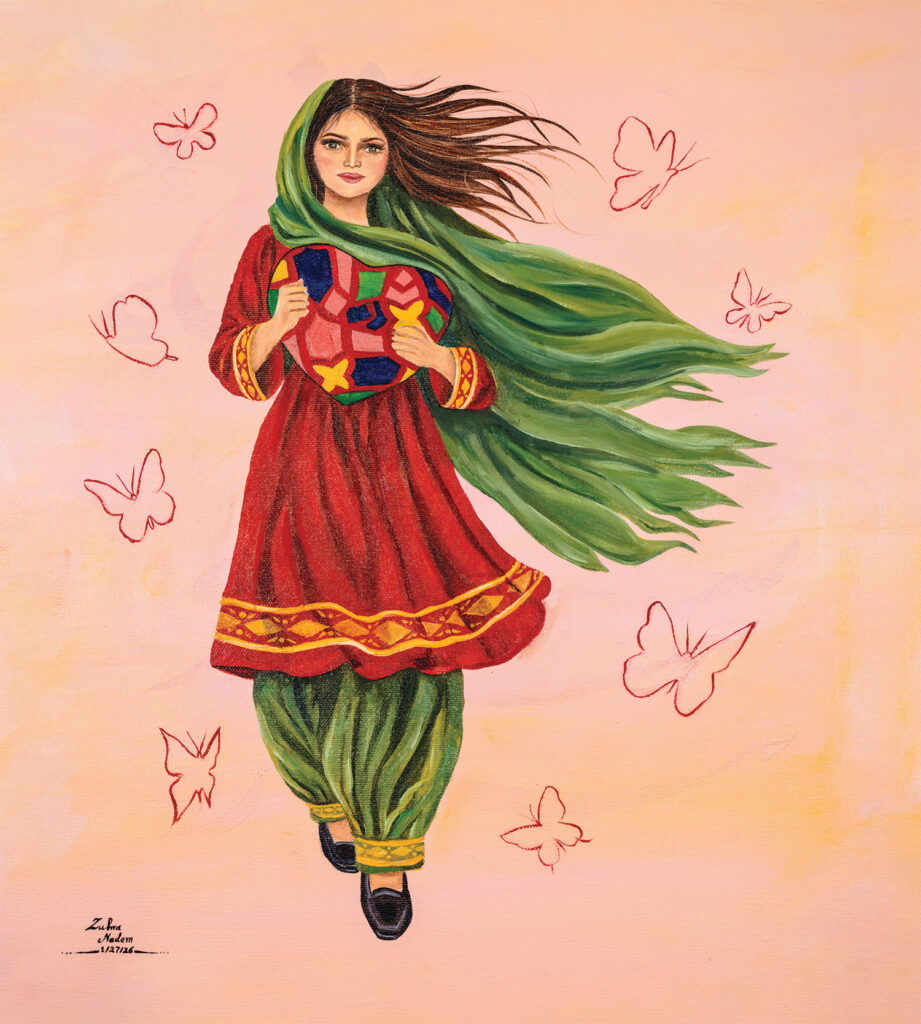
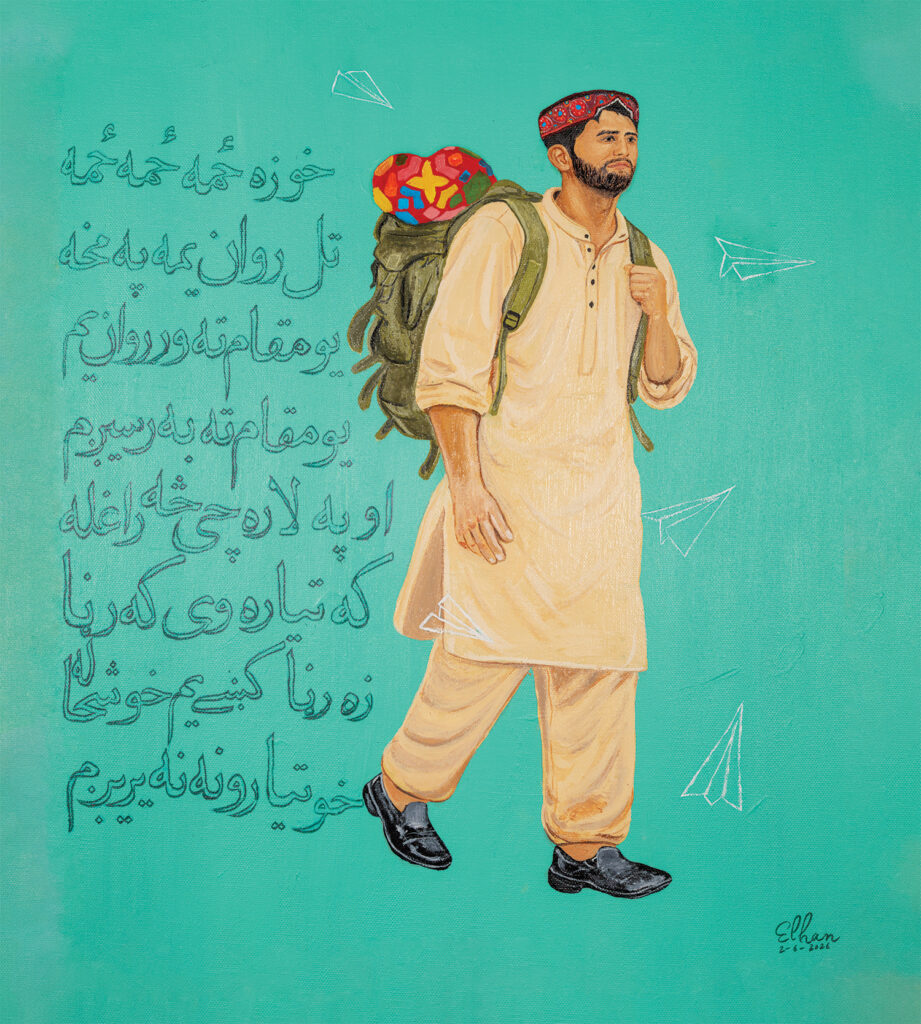
I think of these three paintings as one piece. These three people could be friends or siblings who migrated or fled from Afghanistan. While traveling they carry the sense of belonging and their personal and cultural identities with them. The patterns inside the hearts they carry represent the beauty of the cultural and ethnic diversity of the people of Afghanistan. Each character is moving in a different direction, showing the separation of family, friends, and dispersing of people from Afghanistan to different parts of the world. The background colors represent three precious stones from Afghanistan: Lapis Lazuli, Ruby, and Emerald.
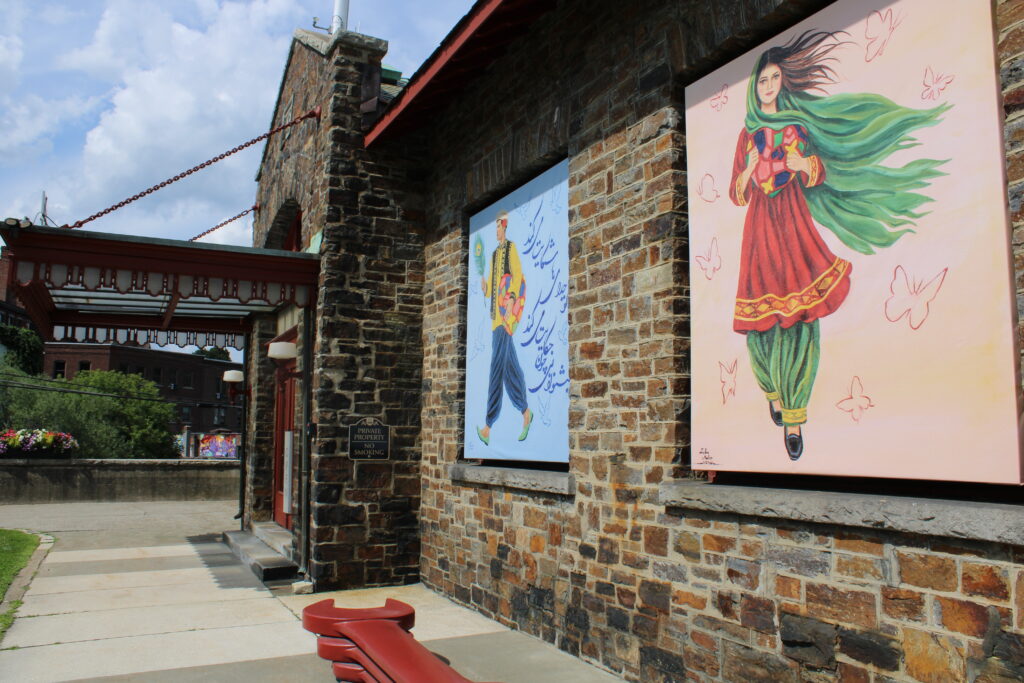
Queer Afghan Boy – He is leaving Afghanistan with joy and excitement for freedom, carrying a peacock feather representing pride in his queerness and orientation. The heart he carries represents the sense of belonging. His hat is a traditional hat called a Pakol, mostly used in North Eastern and Northern Afghanistan. The rose behind his ear is also a cultural practice that most men do in Afghanistan. He wears traditional Afghan clothing: his vest coat is an Afghan waskat, and his shirt and pants represent a combination of Queer and Afghan clothing styles that I have invented here. The doves flying along with him are a symbol of the freedom that he is experiencing while migrating. The text is a famous poem from 13th century Persian poet Rumi. The poem says – “Listen to this (ney) reed-flute as it tells a tale, it complains of separations.” It is a long poem that is about separation and displacement. I painted the poem in Persian calligraphy style called “Shekasta-Nasta’liq.”
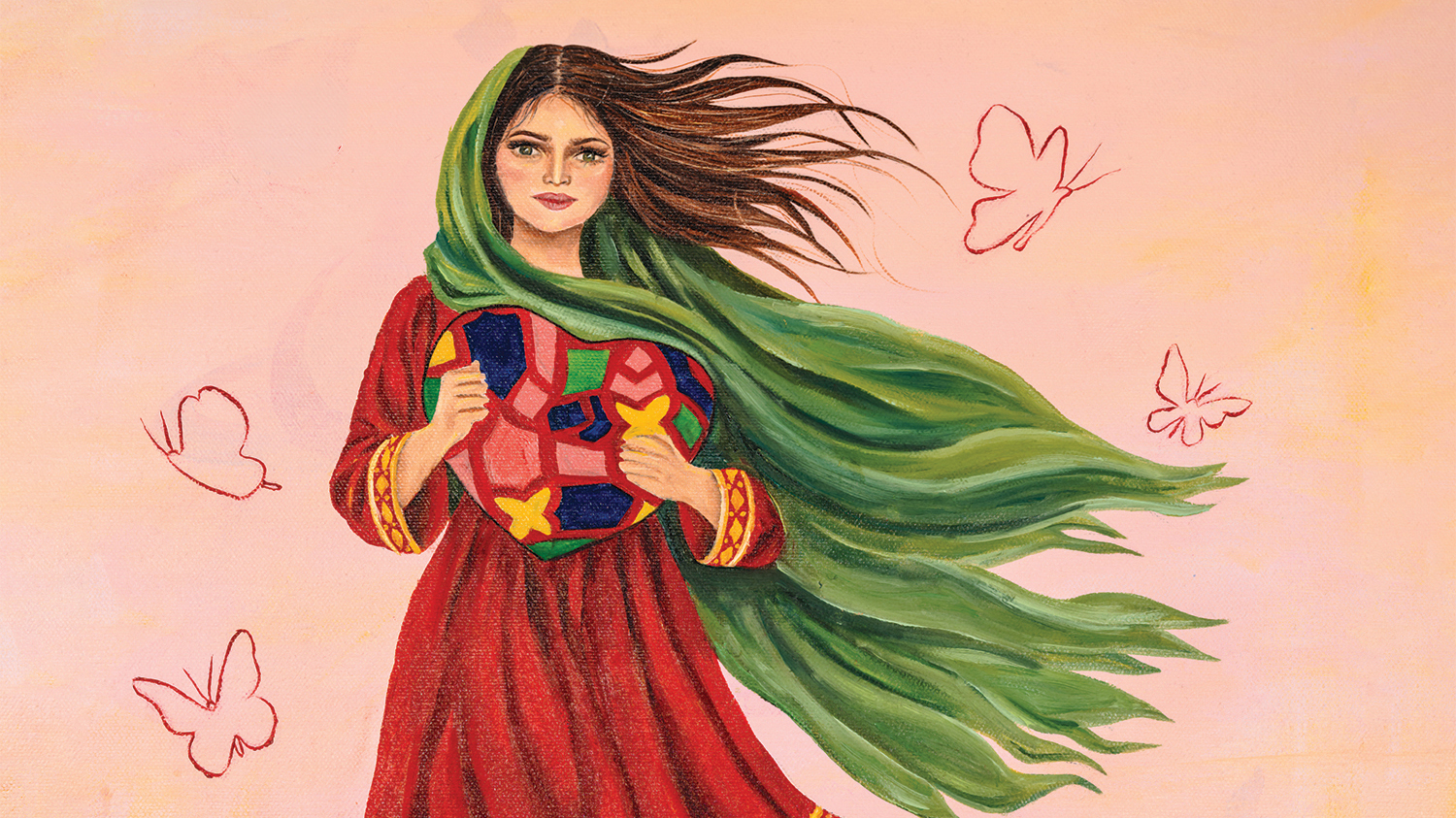
Afghan Girl – The girl in traditional Afghan dress is a representation of Sharbat Gula, also famous as “Afghan Girl,” whose photograph appeared on the cover of National Geographic. During the Soviet Union’s invasion of Afghanistan, Sharbat Gula and her family fled to Pakistan. They lived there for three decades but were not granted citizenship or permanent residency. In fact, in 2016, they were forcefully deported back to Afghanistan. In 2021, Gula’s life was in danger again because of her photo by Steve McCurry in National Geographic magazine in June 1985. The cover of the magazine gave her international fame, but endangered her life. The butterflies are a symbol of constant migration. In 2021, she migrated to Italy. I designed this image, and it was painted by Zuhra Nadem.
Afghan Boy – This Afghan Boy represents Afghan youths who have fled the country on foot, running and walking, to cross borders illegally. Thousands of Afghan youth aged 13-28, mostly teenagers, escape from Afghanistan to Iran, Turkey, Greece, and other European countries, mostly Germany, England, Austria, Belgium, and France. They usually run from the country with one backpack and sometimes with their traditional attire. The hat he wears is from Kandahar, Afghanistan. The text is the last four lines of a Pashto poem by Abdul Ghani Khan, a poet from Khyber Pakhtunkhwa, Pakistan. The poem translates, “And I will go, and go and go, I will be going forward, I am going to a destiny, and I will arrive at a destiny, and whatever comes on my way, light or darkness, I am happy in the light, but I am not afraid of the darkness.” I painted the poem in Pashto calligraphy called “Naskh.” The paper airplanes are a symbol of migration.
— Abdullah Elhan
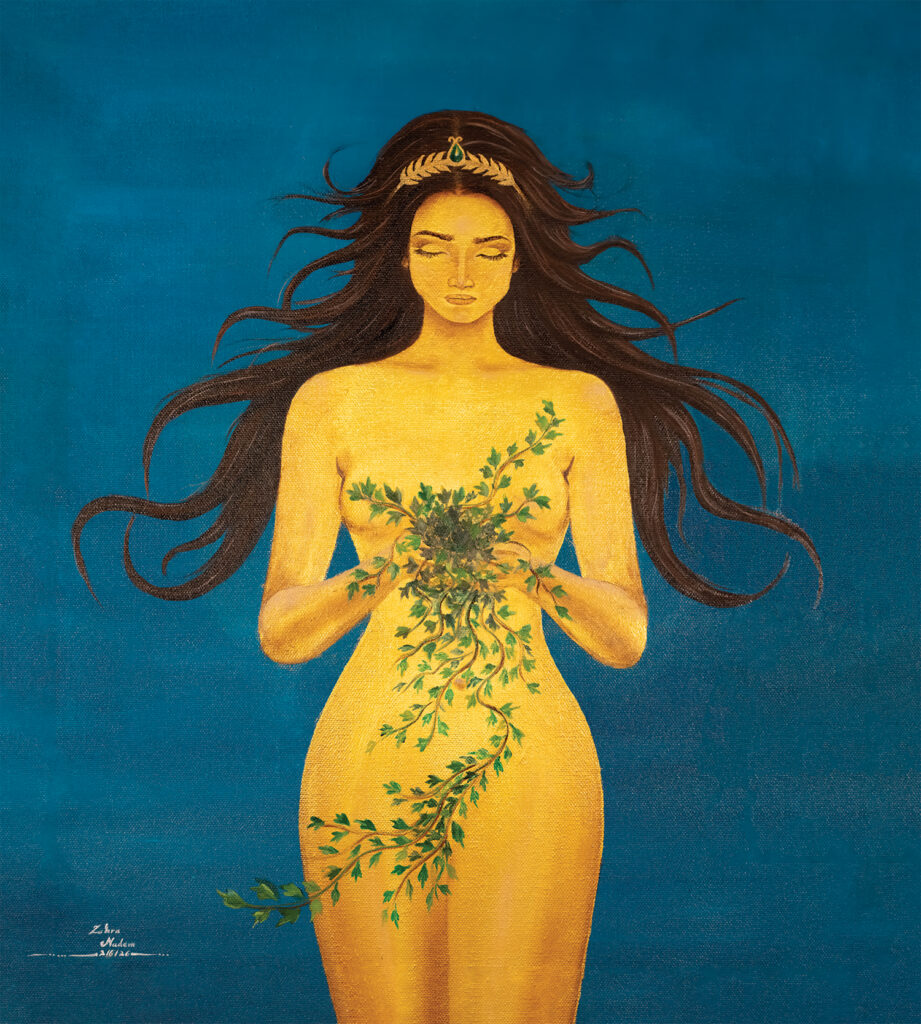
Journey of the Ivy (Eshqapichan-عشقه پیچان) represents my personal journey of migration and the inner world of a woman who carries her home within herself.
The golden body of the figure symbolizes the precious essence of womanhood—an inner value that does not change with geography, borders, or displacement. Gold, which I have used my previous works, reflects resilience, dignity, and an unbreakable core that remains constant despite external transformations.
On her head, I placed a golden crown made of wheat, adorned with an emerald stone—one of the precious gems of Afghanistan. For me, the crown is a symbol of courage, pride, and perseverance. I often use this symbol in my paintings to honor the strength and endurance of women who continue to stand tall through hardship and change.
Her flowing hair represents both freedom and struggle—movement shaped by unseen winds, much like the unpredictable path of an immigrant life.
In her hands, she gently holds ivy. The ivy is the central metaphor of the painting. Like migration, ivy grows in many directions, adapting to new environments and landscapes. Yet no matter how far it spreads, it always remains connected to its roots. Without its roots, ivy loses its meaning and life. For me, it symbolizes home, memory, love, and the quiet sense of belonging that an immigrant carries wherever she goes.
The deep blue background creates a space of solitude and reflection, suggesting both distance and calm—an inner world where identity is preserved even in unfamiliar places.
Through this work, I wanted to express that migration changes the surroundings of a person, but it does not change their essence. Home is not only a place—it is something we carry within.
— Zuhra Nadem
Artwork Images


Installation Views

Thank You
Major support for Migration/Home is provided by Cohen Institute for Holocaust and Genocide Studies at Keene State College, and a Spark! Connecting Community grant from the Vermont Community Foundation.